

Analyse and define objectives
The organisation’s situation, needs, resources, competence, priorities and internationalisation objectives.
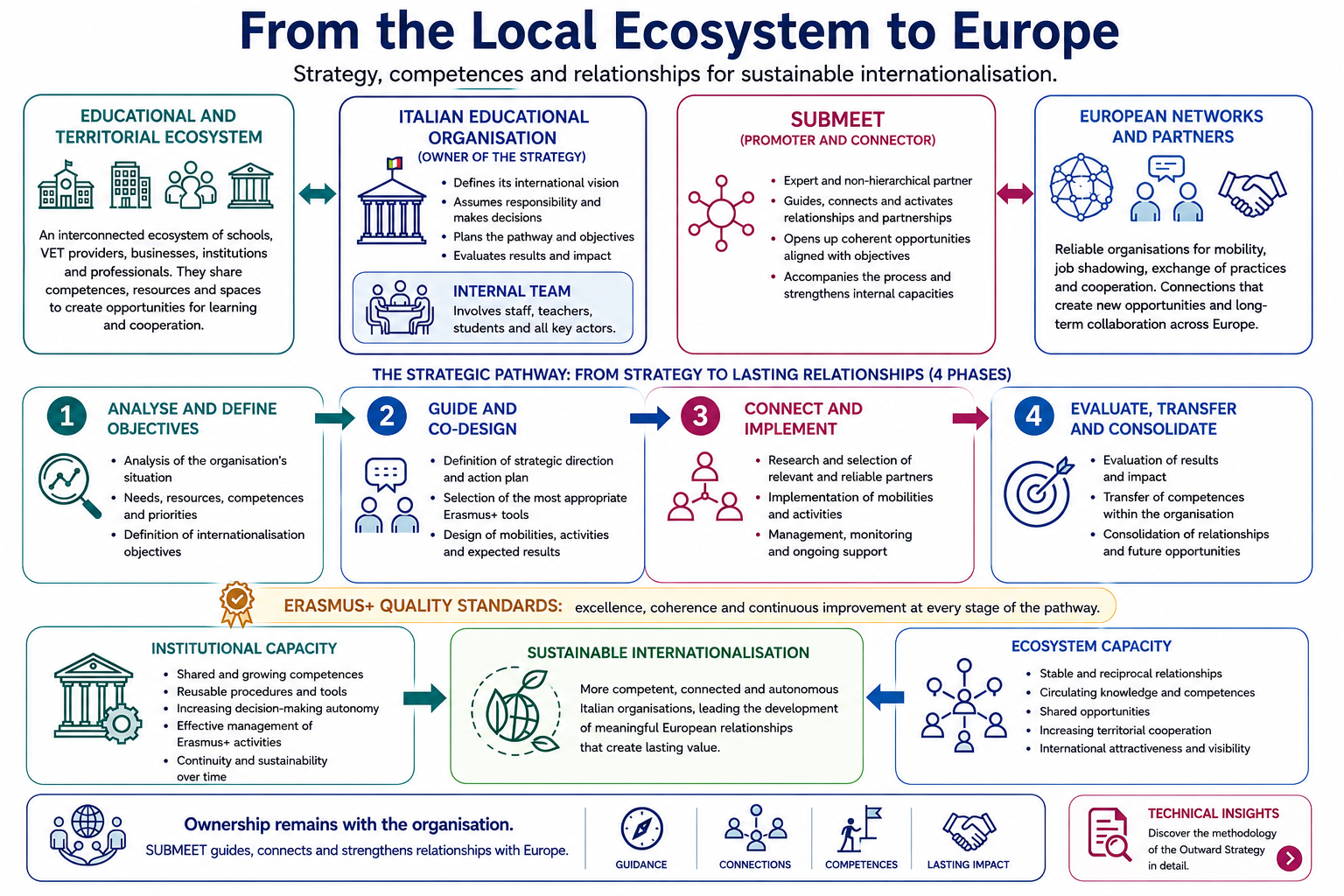
Strategy, competences and relationships for sustainable internationalisation. Ownership remains with the organisation; Submeet guides, connects and strengthens relationships with Europe.
← Back to InternationalisationSelect the infographic to view it at full size.
 Open and enlarge the infographic ↗
The organisation’s situation, needs, resources, competence, priorities and internationalisation objectives.
Strategic direction, the most appropriate Erasmus+ tools, activities and intended outcomes.
Relevant and reliable partners, implementation, management, monitoring and ongoing support.
Outcomes, impact, transfer of competence and the development of future opportunities.
Erasmus+ quality standards · excellence, coherence and continuous improvement at every stage.
The two levels reinforce one another and make internationalisation less dependent on individuals or one-off opportunities.
Tell us about your organisation’s starting point, priorities and responsibilities.